Choosing electronic housings in 2026 isn't just about comparing prices, sizes, or looks anymore. These days, devices produce more heat, handle bigger amounts of data, and often need to stand up to some pretty tough environments. A good enclosure needs to keep dust, moisture, vibrations, electromagnetic interference, and accidental bumps away from sensitive circuits. It’s all about protecting what's inside.
Uwe Scharf, a senior guy at Rittal, put it pretty well—he said, “The enclosure is part of the system, not an afterthought.” That really sticks. For example, a small aluminum box might be great for transferring heat, but it could jack up production costs. On the flip side, a lightweight polycarbonate housing might save on shipping and handling, but it can get scratched easily or even warp under heat. Truth is, there’s no one-size-fits-all answer.
This guide is here to help engineers and buying teams pick the right electronic housings—whether they’re for industrial controls, medical gear, smart infrastructure, or edge computing. We’ll look at factors like material strength, thermal management, ingress protection, EMC shielding, how to run cables in and out, mounting options, customizing, and how easy they are to service over the years. Because in the real world, these little details matter. A poorly placed connector can cause big delays. A weak seal can let dust or moisture wreck the whole setup.
Figuring out the balance between technical needs and what’s realistic to produce can be tricky. Some projects tend to overdo the protection, wasting money, while others jump into selecting a housing that looks good without checking if it’ll fit the inside components. That’s a mistake many make.
At the end of the day, in 2026, the best housing isn’t always the flashiest or the newest. It’s the one that keeps your electronics safe, makes assembly straightforward, and keeps working reliably for years to come.
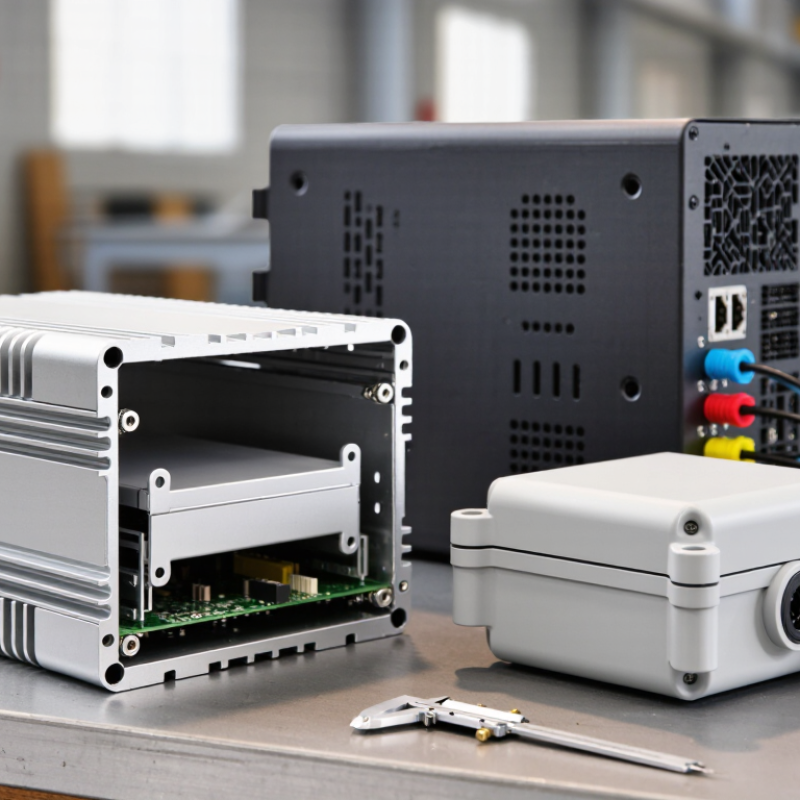
Before selecting an Electronic Casing, define what the enclosure must protect and where it will operate. An indoor control unit faces different risks from an outdoor power monitor. List heat, moisture, dust, vibration, impact, chemicals, and cleaning methods. Do not guess.
Thermal load deserves early attention. The International Energy Agency’s Electricity 2024 report estimates that data centers used about 460 TWh globally in 2022. It projects consumption could exceed 1,000 TWh by 2026. That growth increases pressure on cooling systems and enclosure ventilation.
A sealed housing may prevent dust entry, yet trap heat around circuit boards.
A vented design may cool better, but expose electronics to humidity and particles.
The choice is rarely perfect.
Check the required ingress rating against real exposure, using IEC 60529 test categories as a reference. Consider condensation, not only rainfall. In coastal areas, salt-laden air can corrode fasteners and connectors. In factories, oil mist and vibration may matter more than water.
Uptime Institute’s 2024 Global Data Center Survey continues to identify power and cooling problems among major operational concerns. That finding supports practical thermal testing before production.
Build a sample Electronic Casing, place it under expected load, and measure internal temperature at the hottest component. Field conditions are often messier than specifications. Recheck assumptions. A design that passes a clean laboratory test may still struggle beside a furnace, compressor, or sun-heated wall.
Material selection should begin with the failure risk, not appearance. Polycarbonate offers high impact resistance and electrical insulation for portable control units. ABS is lighter and easier to mold, but heat and ultraviolet exposure can reduce its service life. Aluminum adds stiffness and heat dissipation. However, it conducts electricity and may require internal liners, coatings, or insulating barriers. Stainless steel suits corrosive, high-moisture locations, though its weight and cost can become limiting.
IEC 60529 defines IP ratings for protection against solids and water, but an IP rating does not prove ultraviolet stability or chemical resistance. A sealed plastic box may still crack near a hot motor. A metal enclosure may survive impact but create grounding and condensation problems. This choice is rarely perfect. Select flame performance, insulation distance, wall thickness, and gasket material together. Field conditions often expose assumptions that laboratory testing misses.
How to Choose Electronic Housings in 2026?
Determine the required size before selecting an electronic housing. Measure the board, connectors, heat sources, fasteners, and cable bend radius. Then add service clearance around every part. A practical starting point is 20–30% internal spare volume for wiring, airflow, and future changes. It is not a rule. Dense power modules may need much more space. Grand View Research’s 2024 electronic enclosure analysis projects market growth above 6% annually through 2030, reflecting rising demand for compact but serviceable designs. Compact should not mean cramped.
Layout should support cooling, inspection, and safe component access. Keep heat-generating parts near ventilation paths or metal surfaces. Separate noisy power circuits from sensitive signal wiring when possible. Place frequently adjusted components near a removable panel. Leave enough room for a screwdriver, test probe, and gloved hand. I still underestimate cable slack during early layouts. That mistake creates expensive rework. A 30-millimeter connector may need 80 millimeters of working clearance. Check the real assembly, not only the CAD model. The Fortune Business Insights 2024 electronic packaging report forecasts continued growth in packaged electronics, increasing pressure on thermal and mechanical integration. Select environmental protection using IEC 60529 ratings, but verify gasket compression, cable glands, and ventilation details in practice. A housing can meet a rating on paper and still fail after repeated servicing.
When selecting a Cabinet Electronic enclosure in 2026, treat heat as a design constraint, not an afterthought. Start by listing every heat source, including processors, power supplies, batteries, and converters. Measure their combined wattage during peak operation, not only during normal testing. Then examine ambient temperature, airflow, dust, humidity, and the clearance around the enclosure. A sealed housing protects sensitive circuits, but it can trap heat quickly. For outdoor or factory installations, compare natural convection with forced-air cooling. Use thermal simulations when possible, then confirm results with sensors during a realistic load test. Surface temperature matters too. Technicians may touch the housing, while internal components face stricter limits.
Tips: Leave clear airflow paths above hot components. Place vents away from dust sources. Use aluminum or another thermally conductive material when weight and corrosion conditions allow. Check fan noise, filter maintenance, and failure alarms before approval. Small details often decide reliability.
Do not rely on a catalog rating without checking how it was tested. Ratings can assume a cooler room, open installation, or ideal airflow. During evaluation, record internal temperatures at several points, including corners and cable entry areas. An enclosure may feel cool outside while a power module overheats inside. I have seen early calculations miss heat from connectors and charging circuits. That mistake is easy to repeat. Review the design after testing, even when the first results look acceptable. Thermal margin should cover seasonal changes, blocked vents, aging fans, and future components. Sometimes, a slightly larger housing is the more dependable choice.
When selecting Electronic Cabinets in 2026, begin with the hazards around the installation, not the cabinet’s appearance. Dust can settle on circuit boards, block cooling paths, and create hidden failures. For fine particles, choose an enclosure with a suitable IP rating and sealed cable entries. Water needs closer attention. An IPX4 rating resists splashes, while IPX6 handles powerful water jets. Temporary immersion requires a different protection level. Always inspect doors, gaskets, hinges, and cable glands together. One weak entry point can reduce the protection of the entire cabinet.
IP ratings do not measure chemical resistance or impact strength. Match the enclosure material with the actual chemicals nearby, including cleaning fluids, oils, salt spray, and process vapors. A material that survives water may still become brittle or discolored after repeated solvent exposure. Ask for compatibility data, then test a small sample when conditions are uncertain. This step is easy to underestimate. For physical damage, review the IK impact rating and the likely force at the site. A cabinet beside forklift routes needs stronger protection than one inside a quiet control room. Consider mounting height, door clearance, vibration, and falling tools. Ratings help, but they cannot replace a site inspection. Real installations are messier. Allow space for heat dissipation, because sealing an enclosure can trap heat and shorten component life. I would also recheck the selected rating after maintenance requirements are added.
| Application Environment | Recommended Ingress Protection | Impact Protection | Typical Housing Materials | Chemical Exposure Guidance | Suitable Use Cases | Important Selection Notes |
|---|---|---|---|---|---|---|
|
Clean, dry indoor areas Low dust and no direct water exposure |
IP30–IP40 Protects against solid objects larger than 2.5–12.5 mm, depending on the first digit. No protection against water. |
IK05–IK06 Up to 0.70 J of impact energy |
ABS, polycarbonate, painted steel | Generally suitable for light indoor contaminants. Verify compatibility with cleaning agents, solvents, and plasticizers. | Control panels, laboratory instruments, office electronics, indoor sensors | Do not use where condensation, washdown, dust clouds, or accidental splashing can occur. |
|
Dusty indoor or sheltered industrial areas Limited water exposure |
IP54 Limited dust ingress that does not interfere with operation and protection against water splashes from any direction. |
IK07–IK08 Up to 2 J of impact energy |
Polycarbonate, ABS, powder-coated steel | Choose a material with documented resistance to oils, coolants, detergents, or process chemicals present at the site. | Factory controls, machine-mounted electronics, indoor junction boxes | IP54 is not dust-tight and is not intended for hose-directed water or immersion. |
|
Outdoor locations with rain and airborne dust Regular weather exposure |
IP65 Dust-tight and protected against water jets from any direction. |
IK08 5 J of impact energy |
UV-stabilized polycarbonate, fiberglass-reinforced polyester, coated metal | Check resistance to UV exposure, acidic rain, salt, fertilizers, and atmospheric pollutants. | Outdoor monitoring equipment, utility controls, building automation, communications equipment | Use UV-resistant materials, suitable cable glands, sealed connectors, and a mounting arrangement that prevents water pooling. |
|
Outdoor or industrial washdown areas Powerful water jets and heavy contamination |
IP66 Dust-tight and protected against powerful water jets. |
IK08–IK10 5–20 J of impact energy |
Stainless steel, reinforced polyester, polycarbonate | For frequent cleaning, validate resistance to alkaline detergents, acidic cleaners, disinfectants, and process fluids. | Food-processing support equipment, wastewater systems, industrial production lines | Confirm that the complete assembly—not only the enclosure body—maintains the required rating after installation and cleaning. |
|
Temporary immersion risk Flooding, accidental submersion, or equipment installed below splash level |
IP67 Dust-tight and protected against temporary immersion in water up to 1 m, under the specified test conditions. |
IK08–IK10 5–20 J of impact energy |
Polycarbonate, reinforced polyester, stainless steel | Assess water chemistry, dissolved salts, oils, and cleaning chemicals in addition to the immersion requirement. | Outdoor control equipment, low-level sensors, drainage and pumping installations | IP67 does not automatically indicate protection against high-pressure water jets. IP66/IP67 may be required when both conditions exist. |
|
Continuous or deep immersion Specified underwater installation |
IP68 Dust-tight and protected against continuous immersion under conditions specified by the enclosure manufacturer or test documentation. |
IK08–IK10 5–20 J of impact energy |
Stainless steel, engineered polymer, reinforced composite | Require documented compatibility with the exact water, chemical, temperature, and pressure conditions. | Submersible monitoring equipment, underwater instrumentation, flood-prone installations | IP68 is not a single universal depth or time limit. Obtain the declared test conditions and verify cable-entry performance. |
|
High mechanical-impact areas Frequent knocks, tools, vibration, or falling objects |
IP54–IP66 Select the water and dust rating separately according to the actual environment. |
IK09 10 J of impact energy IK10 20 J of impact energy |
Thick polycarbonate, reinforced polyester, steel, stainless steel | Confirm that chemicals will not embrittle, swell, soften, or corrode the enclosure after impact resistance is considered. | Workshops, construction equipment, transport infrastructure, exposed machine controls | Impact ratings apply to specified test conditions. Check door, hinges, locks, viewing windows, and mounting hardware as a complete system. |
|
Corrosive chemical atmosphere Salt spray, acids, alkalis, solvents, or aggressive process vapors |
IP65–IP68 Select the water rating based on cleaning, rain, spray, or immersion conditions. |
IK07–IK10 2–20 J of impact energy |
316 stainless steel, suitable engineered polymer, chemically resistant composite | Use a chemical-compatibility chart based on concentration, temperature, contact time, and mechanical stress. No material is universally resistant to every chemical. | Chemical processing, marine environments, wastewater treatment, industrial laboratories | Inspect fasteners, hinges, seals, cable glands, coatings, and transparent covers because the weakest component can determine service life. |
|
Food, pharmaceutical, or hygiene-controlled areas Frequent sanitation and strict contamination control |
IP65–IP69 IP69 is intended for high-pressure, high-temperature water jets under defined test conditions. |
IK08–IK10 5–20 J of impact energy |
Stainless steel or hygienic-grade engineered polymer | Validate resistance to the actual detergents, disinfectants, sanitizers, and elevated cleaning temperatures. | Processing lines, filling equipment, inspection systems, hygienic control stations | Use smooth, cleanable surfaces with minimal crevices. Verify that seals and cable-entry components are also suitable for sanitation cycles. |
Choosing an Electronic Box Enclosure in 2026 starts with the mounting environment, not appearance. A wall-mounted unit needs rear clearance, anchor strength, and cable access. DIN-rail mounting suits control cabinets and faster service. Panel mounting gives a clean face, but cutout tolerances matter. Handheld products need grip, impact resistance, and sealed buttons. Leave room for airflow. A tight fit can trap heat.
Manufacturing choice should follow volume, geometry, and revision risk. CNC machining works well for small batches and precise aluminum features. Sheet metal supports rugged panels, folded flanges, and efficient medium production. Injection molding becomes attractive at higher volumes, especially with repeated shapes. Additive manufacturing can test fit quickly, although surface finish and fire performance may need improvement. In one review, a prototype looked excellent but blocked a connector after assembly. That mistake was inexpensive. Repeating it in tooling would not be.
Compliance planning belongs before tooling. Check ingress protection, material flammability, grounding, EMC behavior, and restricted-substance requirements. Evidence may include test reports, material declarations, and production inspection records. Requirements differ by market and application, so confirm current rules with a qualified engineer or testing laboratory. Use conductive gaskets where shielding matters, and inspect compression after repeated opening. Do not assume a thicker wall solves every problem. It can increase weight, cost, and heat retention. Reliable designs record mounting loads, torque values, cable-bend limits, and service access before release.
Identify the equipment, installation location, and main hazards. Consider heat, moisture, dust, vibration, impact, chemicals, and cleaning methods. Do not guess.
Indoor control equipment faces different risks from outdoor monitoring equipment. Factory locations may involve oil mist, vibration, dust, and frequent cleaning.
Heat from processors, power supplies, batteries, and converters can accumulate inside. Measure combined wattage during peak operation, not only normal testing.
No. Sealing can block dust and moisture, but it may trap heat around circuit boards. Ventilation can improve cooling while admitting particles.
Build a sample enclosure and operate it under realistic load. Measure temperatures near power modules, corners, cable entries, and other hot components.
Include expected room temperature, airflow, humidity, dust, equipment clearance, and seasonal changes. A sun-heated wall can create harsher conditions than a laboratory.
Match the enclosure’s ingress rating to actual exposure. Consider condensation, not only rainfall. Coastal air may corrode fasteners and connectors.
Keep clear airflow paths above hot components. Consider natural convection or forced-air cooling. Check fan noise, filter cleaning, and failure alarms.
Ratings may assume an open installation, cool room, or ideal airflow. The enclosure can feel cool outside while internal components overheat.
Leave room for blocked vents, aging fans, seasonal temperature changes, and future components. A slightly larger housing may provide safer operation.
Choosing Electronic Housings in 2026 requires a clear understanding of the device’s purpose, operating environment, and long-term performance needs. Start by considering exposure to heat, moisture, dust, chemicals, vibration, and physical impact. Select materials that provide the right balance of mechanical strength, electrical insulation, corrosion resistance, and durability. The housing should also offer sufficient internal space for components, wiring, ventilation, maintenance, and future upgrades while keeping controls and service areas accessible.
Thermal management is another essential factor, especially for high-power or continuously operating equipment. Evaluate whether natural ventilation, heat-transfer features, or additional cooling methods are needed to maintain safe temperatures. Protection ratings should match the expected risks from water, particles, chemicals, and impact. Finally, compare wall, panel, rack, or portable mounting methods, along with manufacturing options, customization requirements, cost, production volume, and applicable safety or industry compliance needs. A well-matched housing improves reliability, simplifies installation, and supports the product throughout its service life.