
Air Conditioning Working Principle Full Process
Let's connect the four parts in series and see the fantastic journey of the refrigerant:
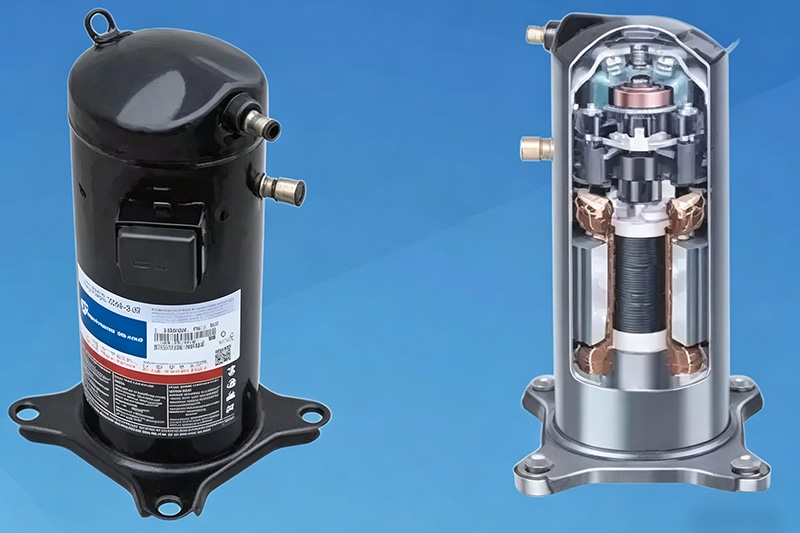
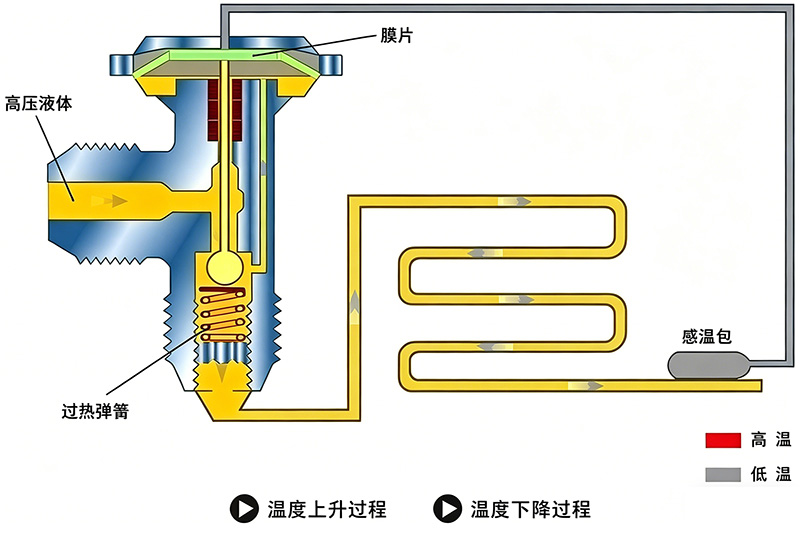
Compressor pressurization → condenser heat dissipation → expansion valve throttling → evaporator heat absorption → return to compressor
In this closed cycle, the refrigerant continues to carry out the phase change cycle of "compression-condensation-expansion-evaporation", just like an indefatigable "heat carrier", which continuously transfers indoor heat to the outside.
Decoding the parameters of air conditioner
The following is a detailed explanation of the parameters that must be read when buying an air conditioner:
1. Condensation/evaporation temperature difference
principle :
Condensing temperature difference refers to the difference between the condensing temperature of the refrigerant in the air conditioner condenser and the temperature of the cooling medium, and evaporation temperature difference refers to the difference between the evaporation temperature of the refrigerant in the evaporator and the temperature of the cooling medium.
Relationship with energy efficiency ratio:
A smaller condensation/evaporation temperature difference means that the air conditioning system can transfer heat more efficiently, allowing the refrigerant to release or absorb heat more fully during the condensation and evaporation process, reducing energy loss, improving the energy efficiency ratio, and saving more energy and electricity.
2. Superheat/supercooling
definition :
Superheat is the difference between the actual temperature of the refrigerant vapor at the outlet of the evaporator and its saturation temperature.
The subcooling degree refers to the difference between the actual temperature of the refrigerant liquid at the outlet of the condenser and its saturation temperature.
Relationship with system optimization level:
The right superheat ensures that the refrigerant in the evaporator is completely evaporated, preventing the liquid refrigerant from entering the compressor and causing damage, and improving the refrigeration efficiency.
Appropriate subcooling can make the refrigerant fully liquefied before entering the throttling device, improving the cooling capacity and system stability. Proper control of superheat and subcooling indicates a high level of design and optimization of the air conditioning system.
3. Compression ratio concept:
The compression ratio is the ratio of the suction pressure to the exhaust pressure of the compressor.
Relationship with compressor performance:
The compression ratio reflects the compressor's ability to compress refrigerant vapor. A higher compression ratio means the compressor can compress low-temperature, low-pressure refrigerant vapor into high-temperature, high-pressure vapor under different operating conditions to achieve the refrigeration cycle. A high-performance compressor can maintain a stable compression ratio under different operating conditions, ensuring efficient operation of the air conditioning system and providing good cooling or heating effects.
4. Heat exchange area composition:
It is mainly composed of the area of the evaporator and condenser of the air conditioner.
Relationship with cooling speed:
A larger heat exchange area can make more contact area and time between the refrigerant and the air or water medium, accelerate the heat exchange speed, make the indoor air cooler or warmer faster, shorten the time to reach the set temperature, improve the speed of cooling or heating, and quickly create a comfortable indoor environment for users.
Understanding the 'five vital organs and six internal systems' of your AC not only helps you choose a high-performance, cost-effective unit but also ensures proper operation to extend its lifespan. The next time a technician mentions 'high condensing temperature,' you'll know it's time to clean the outdoor unit!